
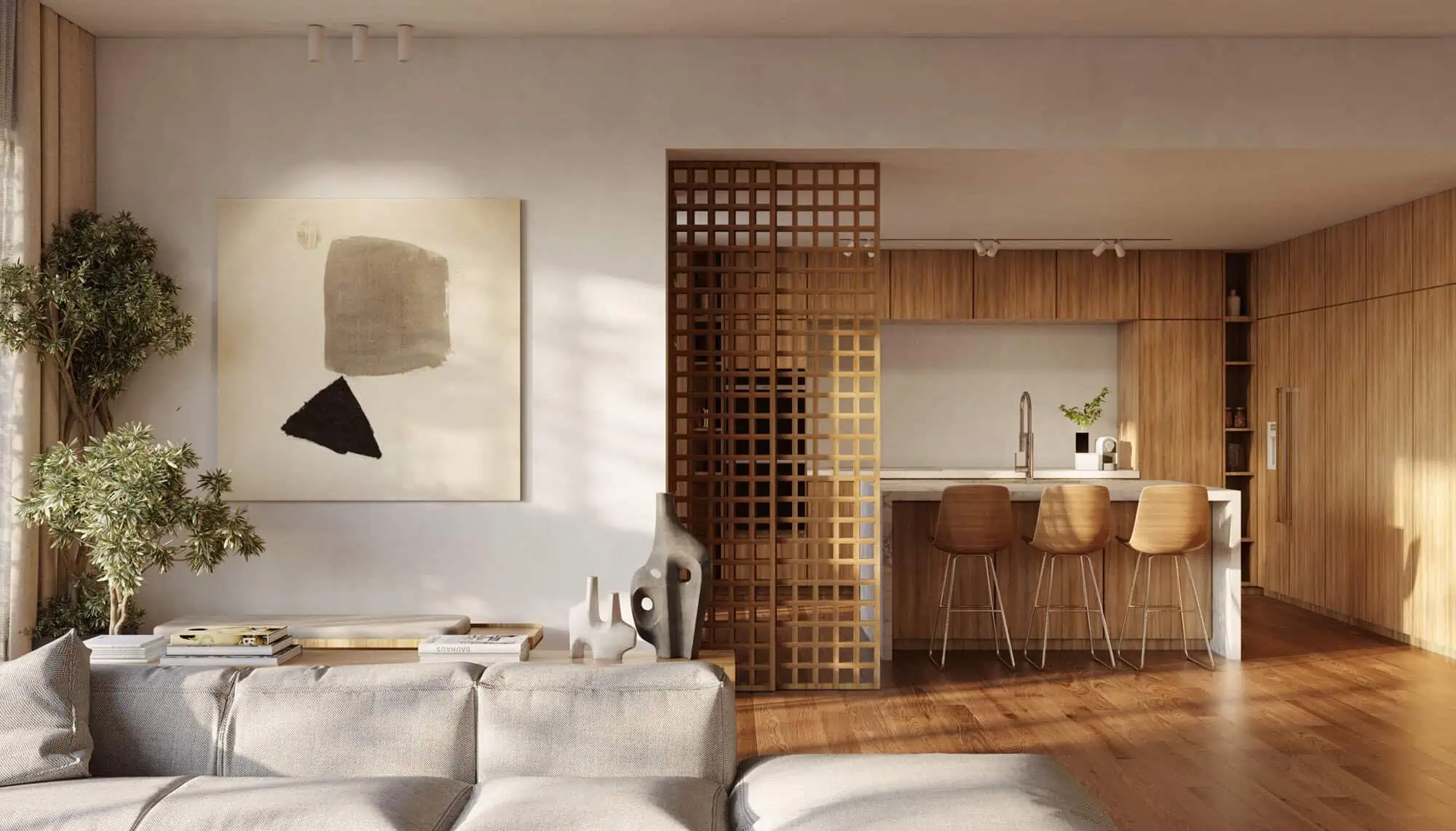
Have you ever looked at a rendered room and felt that something was off, even if you could not say what? Usually the answer lies in light and materials. Real interiors are full of subtle effects: a soft glow near a window, a shadow beneath a table, the slight sheen of polished stone. When these details are missing or inaccurate, an image feels artificial. Skilled artists spend much of their effort on exactly these elements. This article explains how light, shadow, and texture contribute to convincing architectural interior rendering, and what to look for when choosing interior rendering services that care about the finer points of visual realism.
The Role of Light
Light defines mood. A bright, airy room with large windows feels fresh and welcoming, while warm, low lighting creates intimacy. Artists choose the time of day, the direction of sunlight, and the placement of lamps to support the intended atmosphere.
Realistic lighting also depends on how light bounces. Color from a wooden floor can subtly tint nearby walls, and sunlight can create soft glows in shaded corners.
Window treatment, ceiling height, and nearby surfaces all influence how light behaves. A cream wall will bounce a gentle warm glow, while dark finishes absorb more light and make the room feel more dramatic. Artists adjust these relationships carefully so the mood matches the design intent.
Artificial lighting deserves equal care. Pendant lamps, recessed ceiling lights, and wall sconces each create a different pool of light, and their color temperature changes how materials appear. Matching these choices to the real fixtures keeps the image honest.
Why Shadows Matter in Architectural Interior Rendering
Shadows give objects weight and place them in space. Without them, furniture seems to float. Soft contact shadows under chairs and gentle gradients across walls tell the eye that the scene is grounded.
Shadow quality is a clue to craftsmanship. Harsh, uniform, or missing shadows often signal a rushed or simplistic render.
Reflections are part of material realism too. Polished floors mirror light and furniture, glass reveals what lies beyond it, and glossy cabinetry catches highlights. Done well, these cues are subtle and help the viewer believe the scene without drawing attention to the technique.
Materials and Texture
Every surface behaves differently. Glass reflects and refracts, fabric absorbs light and shows weave, marble has veining and slight gloss, and brushed metal scatters highlights. Accurate materials are essential to communicate the real quality of a design.
Scale is important too. If wood grain is too large or tile patterns are the wrong size, the image looks wrong even if the texture itself is beautiful.
Imperfection adds realism. Tiny variations in surface, slight wear in fabric, and natural asymmetry in styling stop a scene from feeling sterile. Artists add these subtle cues with restraint so the space still looks clean and attractive.
Choosing Detail Oriented Studios
When comparing providers, look closely at portfolio images. Check the edges of furniture, the glow around windows, and the texture of fabrics. Aimir CG describes its interior rendering services as meticulously crafting every element, from the play of light and shadows to the texture of materials, to capture the essence of the envisioned design. That focus on detail is a good standard to hold any studio to.
Looking ahead, advances in rendering technology will make realism easier to achieve, but human judgment about composition and mood will still matter.
Composition and camera choice complete the picture. A slightly lower viewpoint, a natural lens angle, and a thoughtful crop make a room look inviting rather than distorted. Good artists treat each view like a photographer would, choosing the angle that tells the best story.
Conclusion
Light, shadow, and material accuracy are the quiet ingredients of believable visuals. Pay attention to them when evaluating architectural interior rendering, and choose interior rendering services that treat detail as a priority. The extra care shows in the final image.