There’s a specific feeling most musicians chase without always naming it – the sense of being so absorbed in playing that time seems to disappear, mistakes don’t derail you, and the next note just seems to arrive before you consciously think about it. Psychologists call this flow state, and it shows up across every skill-based activity from sports to writing to, yes, playing piano. The problem is that most piano practice is structured in a way that makes flow almost impossible to reach.
Why Traditional Practice Fights Against Flow
Flow state has a few well-documented requirements: a clear goal, immediate feedback, and a challenge level that’s demanding but not overwhelming. Stack those against how most piano practice actually happens, and the mismatch becomes obvious. A student practicing the same eight measures for the fifth time isn’t facing a real challenge anymore – the difficulty has already been solved, so there’s nothing left to stay absorbed in. Feedback is delayed too, often limited to whatever a teacher points out once a week, long after the actual playing happened.
This is part of why so much piano practice feels like effort rather than enjoyment. It’s not that students lack discipline or interest – it’s that the practice structure itself is working against the exact conditions that make an activity feel engaging rather than tedious.
What Sight Reading Changes About the Equation
Sight reading piano naturally satisfies flow state’s core requirements in a way that repetition-based practice doesn’t. Every new piece presents a fresh challenge calibrated to a player’s current level; there’s a clear goal in simply getting through the piece, and – when paired with real-time correction – feedback arrives instantly rather than a week later. Instead of grinding through the same measures until they’re memorized, a player moves continuously from one piece of new material to the next, staying in that demanding-but-achievable zone that keeps attention locked in.
This is also why sight reading tends to feel different from other forms of piano practice once a player builds some comfort with it. There’s less second-guessing and more forward motion, because there’s no option to fall back on memory – every note requires active reading and response in the moment, which is exactly the kind of engaged attention flow state depends on.
The Role of Instant Feedback
Flow state breaks down quickly when feedback is delayed or vague. A student who plays a passage incorrectly and doesn’t find out until the following week’s lesson has already moved on mentally – the correction arrives too late to actually shape how they were thinking about that passage in the moment. Immediate feedback, by contrast, keeps a player’s attention anchored to what’s happening right now, reinforcing correct patterns while they’re still fresh rather than after they’ve had a chance to become a habit.
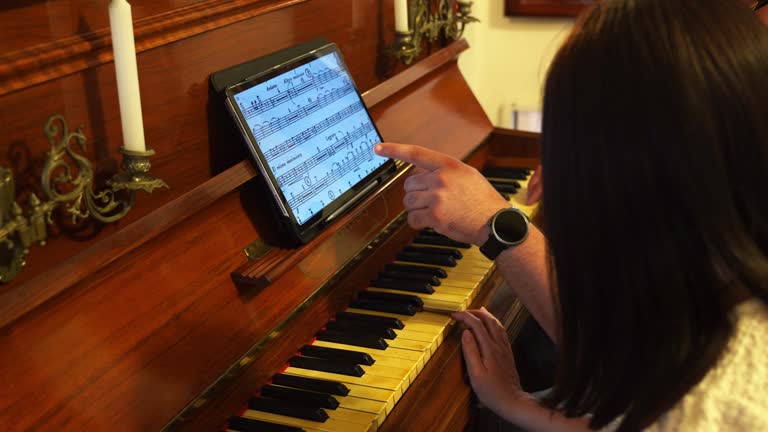
This is where technology has started to close a gap that private lessons alone struggle to fill. A teacher simply can’t watch every minute of a student’s practice throughout the week, but software built around real-time note detection can offer that same instant correction during independent practice, extending the kind of feedback loop that used to be limited to lesson time alone.
Choosing Tools Built Around This Idea
Not every piano app is designed with flow state in mind – plenty still rely on gamified badges and streaks layered over the same repetition-based method books that caused the disengagement in the first place. The distinction worth looking for is whether a platform actually generates continuous new material at an appropriate difficulty level, or whether it’s just repackaging a fixed songbook with a nicer interface.
For anyone evaluating what qualifies as the best piano learning app, that distinction matters more than flashy features. A platform that keeps introducing new music, tracks a player’s actual skill level in real time, and gives instant feedback on accuracy is solving a fundamentally different problem than one built around mastering a static set list. Muse Flow was built specifically around this principle, combining continuous sight reading material with instant feedback to keep players in that focused, flow-driven state rather than cycling through the same handful of songs.
Practicing in a Way That Actually Feels Good
The goal of good practice design isn’t just skill acquisition – it’s making the process itself something a player wants to return to. Flow state is what turns practice from an obligation into something closer to genuine enjoyment, and the structural ingredients that produce it are well understood: continuous challenge, immediate feedback, and material that keeps pace with real ability. Piano practice built around these principles doesn’t just produce better technical results over time – it changes how the whole experience feels, which is often the real reason someone sticks with an instrument long enough to actually get good at it.
FAQs
Q1: How can sight reading piano skills improve?
Regular practice with structured exercises can strengthen note recognition, rhythm, timing, and overall playing confidence.
Q2: What makes the best piano learning app useful?
A strong app combines guided lessons, interactive exercises, progress tracking, and engaging activities that support consistent musical development.
Q3: Is sight reading piano practice suitable for beginners?
Yes. Beginners can start with simple notes and rhythms before gradually progressing toward more complex musical passages.
Q4: How often should children practice piano reading?
Short, consistent sessions can be effective. Regular practice helps reinforce note recognition, timing, coordination, and musical fluency.
Q5: Can an app make piano practice more engaging?
Yes. Interactive challenges, guided activities, and progress features can make practice more enjoyable while encouraging steady improvement.